
Start here • Read and play together, ages 4–7
Three ideas for every day
A principle is an idea that helps us choose what to do. These three ideas help us care for ourselves and live together. We can try them at home, at school, and with friends.
For these pretend plays, use two sock puppets or toys. A clean sock over your hand can be a puppet. A grown-up reads the steps, and your child answers for a puppet. You can also point, draw, or listen.

Be Your True Self
I can choose.
You are you. You matter. You can choose to be honest, kind, and brave. You can feel angry and still choose not to hurt anyone. You can take a breath, use your words, or ask for help. A mistake does not make you bad.
Why it matters
Honest words help us know what happened. Kind choices help people feel safe. Brave choices help us ask for help.
Play it
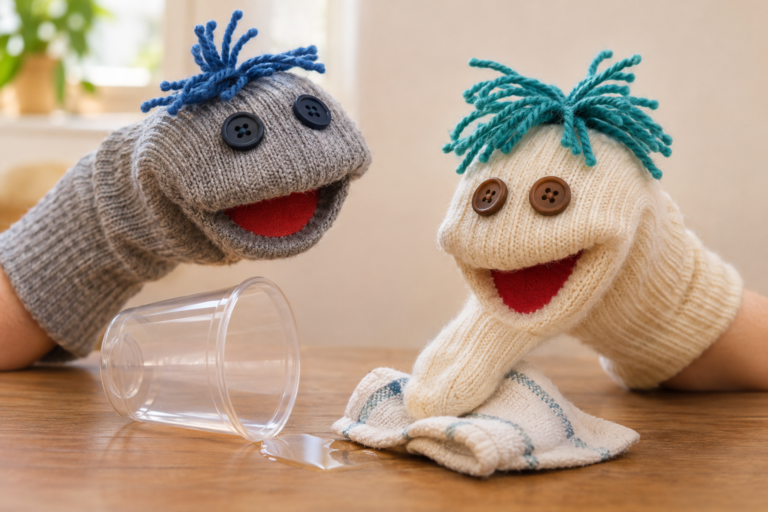
- Act: Pretend one sock puppet knocks over a cup. You do not need to spill real water.
- Say: “I spilled it. Can you help me?”
- Help: Make the other puppet help wipe up the pretend spill with a cloth.
Try these words
- “I did it.”
- “I need help.”
- “No. That could hurt someone.”

Keep Your Hand on FAIR
My needs matter. Yours do, too.
Being fair means listening to what each person needs and looking for a plan where everyone can share in something good. Sometimes you may choose to wait, share, or give up part of what you want so someone else can join in. Everyone may not get their first choice, but everyone matters.
Why it matters
A shared win means the plan gives each person something good—not that everyone gets everything they want. You might choose a game everyone can play instead of your favorite game. Another time, friends can make room for something you enjoy, too. The same person should not always have to give up what they want. Some people need more help or more time to join in.
Play it
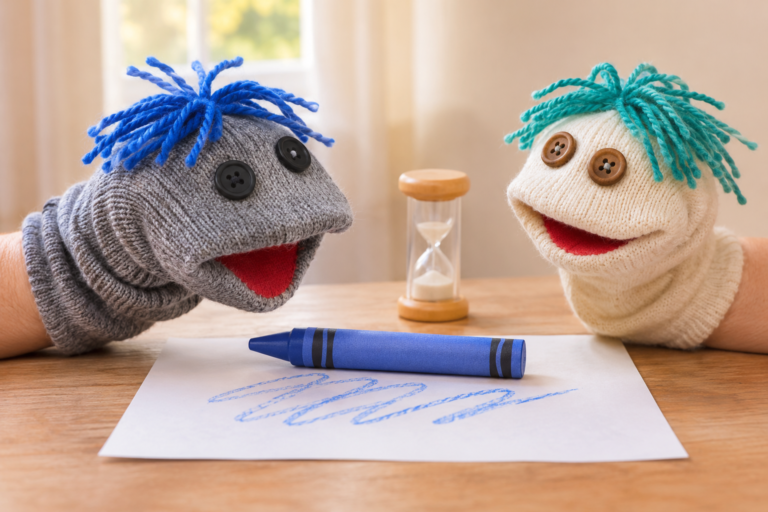
- Act: Two sock puppets both want the same crayon.
- Say: One puppet says, “I want a turn.” The other says, “I’m still coloring.”
- Ask your child: “What could we do so both puppets get to color?” Pause and listen.
- Try a plan: Let one puppet finish a small part of its picture, then give the other a turn. You can use a timer to help them know when to switch.
- Ask: “Did both puppets get a turn?” Waiting can mean giving up what you want right now so both can enjoy coloring.
Try these words
- “What do you need?”
- “Here is what I need.”
- “Can we change our plan?”
Take Care of the Goose
Take care of yourself and others.
Gus is the goose in our stories. His picture reminds us to look after ourselves, other people, pets, and the things we use together. We can drink water when we are thirsty, put toys away so nobody trips, and rest when we feel tired.
Why it matters
Looking after our bodies helps us feel ready to play and learn. Helping a friend shows that we care about them. When someone is tired or cannot help, we can still be kind and include them.
Play it
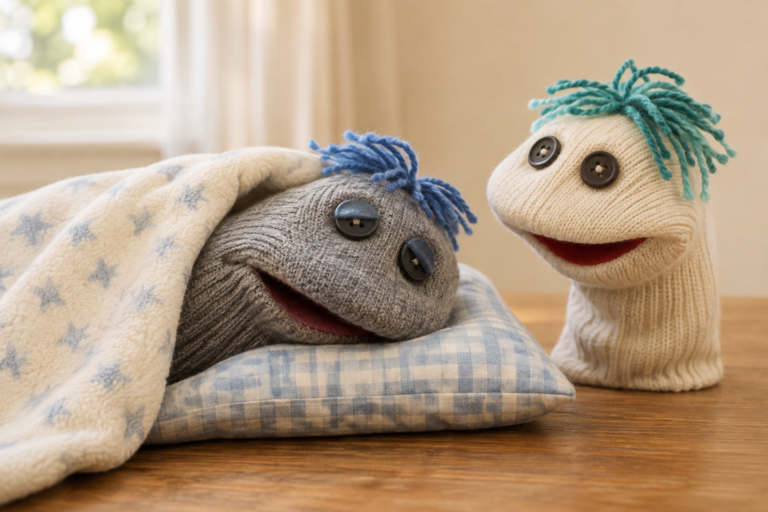
- Act: Make your sock puppet yawn and say, “I’m tired. I need a rest.”
- Ask: “Would you like me to sit with you, or would you like to rest by yourself?”
- Let your child answer for the puppet: “Please sit with me” or “I want to rest by myself.”
- Help: Make a resting place with a small cushion or folded cloth. Follow the puppet’s choice.
Try these words
- “Would you like some help?”
- “I need a rest.”
- “I need to stop for a minute.”
- “Please sit with me.”
A little clue game
A cup fell. “I think Gus did it,” says one toy. Ask, “Did you see it?” Another says, “I bumped the cup.” We can listen before we blame. If we do not know, we can say, “I don’t know.”
Now spot the ideas in a story
Tap a principle picture in any story. Ask one question at a time and pause to listen:
- “What happened?”
- “What could they do next?”
There can be more than one good choice.
First story: The Tower Tumble →
For grown-ups: one minute before reading
Choose just one principle. Point to its badge, say the short reminder, and try the pretend play. After the story, notice one choice that shows it. Repeat another day. This is not a memory test.
Listen and share the work. A child is not bad for feeling upset, finding a sound or touch uncomfortable, or needing help to learn. Children can ask for help, refuse something that could hurt them, and take a rest. Adults must stop hitting or other harm, even if children say they agreed to it. Explain existing rules and listen when a child says a rule is not working.
The toy-play examples are original fiction. Created and developed by Wayne Schmidt for the BYTS Movement with AI assistance.